
Repetition & Remembrance
Why the Qur’ān Speaks Equally to New Recruits and Old Soldiers Alike

﷽
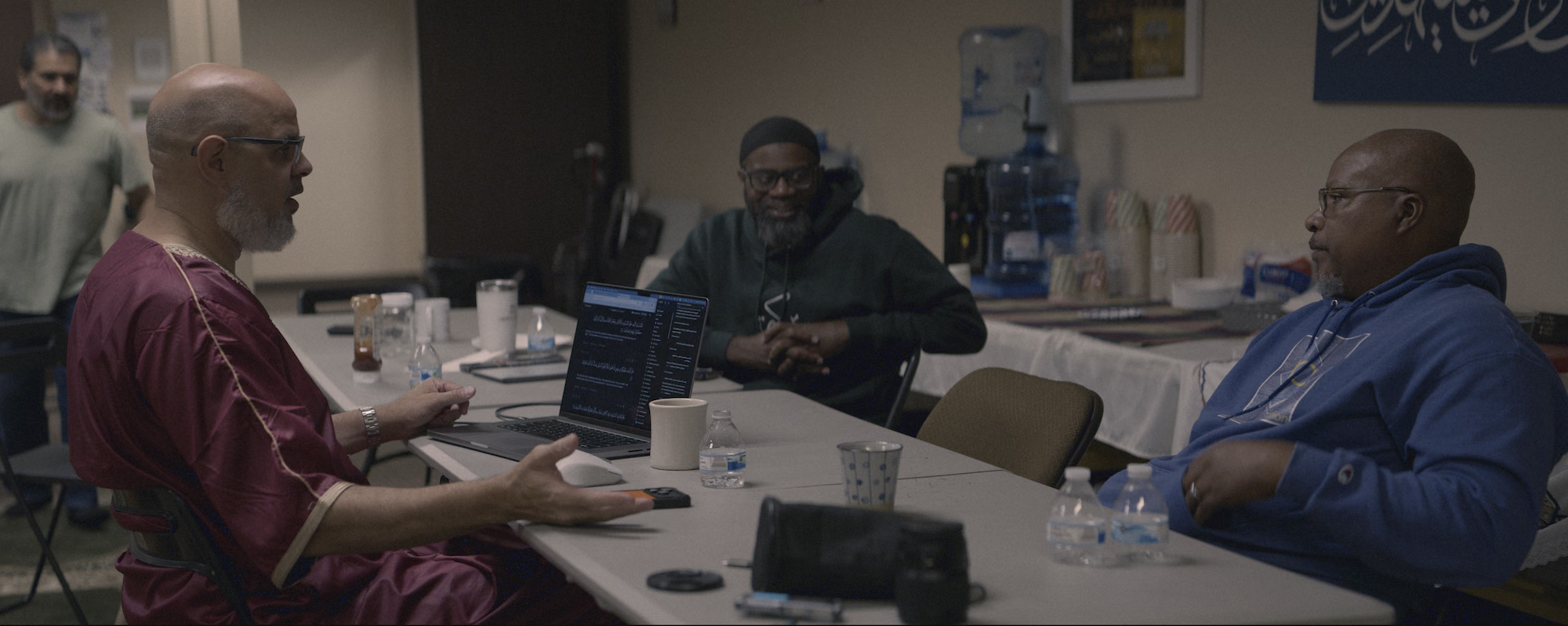
This Sunday I returned to hosting our Fajr Club Breakfast at Middle Ground and teaching our tafsīr class: Understanding the Qur’ān. We resumed with the beginning of the Sixth Chapter, Sūrah al-An’ām.
The chapter of the Qur’ān is revealed at a turning point for the Muslims. The Prophet ﷺ and the Muslims in Makkah are facing increasing hostility, and yet despite this, the message is still, if slowly, spreading. And so the first thing we commented on was one of the characteristics of the Qur’ān, namely how it repeats the same motifs, the same wordings, over and over. Why?
So let’s start with the opening three verses:
ٱلْحَمْدُ لِلَّهِ ٱلَّذِى خَلَقَ ٱلسَّمَـٰوَٰتِ وَٱلْأَرْضَ وَجَعَلَ ٱلظُّلُمَـٰتِ وَٱلنُّورَ ۖ ثُمَّ ٱلَّذِينَ كَفَرُوا۟ بِرَبِّهِمْ يَعْدِلُونَ
هُوَ ٱلَّذِى خَلَقَكُم مِّن طِينٍۢ ثُمَّ قَضَىٰٓ أَجَلًۭا ۖ وَأَجَلٌۭ مُّسَمًّى عِندَهُۥ ۖ ثُمَّ أَنتُمْ تَمْتَرُونَ
وَهُوَ ٱللَّهُ فِى ٱلسَّمَـٰوَٰتِ وَفِى ٱلْأَرْضِ ۖ يَعْلَمُ سِرَّكُمْ وَجَهْرَكُمْ وَيَعْلَمُ مَا تَكْسِبُونَ
the translation of which is:
All praise belongs to Allāh, Who created the heavens and the earth and made darkness and light. Yet incredulously the kāfir indiscriminately sets up equals besides their Lord.
He is the One Who created you from clay, then appointed a fixed term for your death and another known only to Him—yet somehow you all are still wrestling1 with this simple truth.
He is the Only True God in the heavens and the earth. He knows whatever you conceal and whatever you reveal, and knows whatever you do!
First, it’s important to note that while this is the sixth chapter/sūrah of the Qur’ān, it is not the sixth in chronological order. In fact, not even close. While it is essentially agreed that it is a Makkan sūrah, it does have a few verses that were revealed in Madinah, meaning that it was right before and even leading into the Hijrah (the migration from Makkah to Yathrib, later known as Madinah). It is generally estimated to be somewhere around the fiftieth sūrah revealed. How is this important?
Allāh repeats Himself throughout the Qur’ān, sometimes verbatim. So when we see Him saying al-Ḥamdu lillāh (all praise belongs to Allāh), this is not the first, nor the last, time this phrase is mentioned. As we mentioned, this is coming on the cusp of the Hijrah: there are many who’ve already taken their shahādah, and still others taking it at the time of this Sūrah’s revelation, meaning:
Whether you’re a veteran Muslim who’s been there since the beginning of Revelation, or a newbie, it’s critical to remember that all praise belongs to Allāh.
One might think of it like those coming to the Friday khuṭbah:
- Some walk in late;
- Others are there before it starts;
- Others yet come right as the khuṭbah starts.
Therefore we can see that it’s beneficial to keep repeating the same thing, because people are constantly still coming into Islām. It’s also a reminder to those that have been going along this journey all along not to forget: al-Ḥamdu lillāh. And this reminder of al-Ḥamdu lillāh comes at a time when there are big shifts on the horizon; major turbulence is just down the road. I liken it to a kind of motivational speech to troops who are about to embark on a major mission:
“Things have gotten to a point now where you’re joining a major movement. So this is what you’re signing up for. So strap up!”
One can see that in these three mighty verses, Allāh is reminding His believers that He is in control, and that even though the road ahead will be difficult, it is His plan that will ultimately prevail—and that no matter what they face, whatever losses they may suffer, all praise belongs to Allāh.
You can watch the full lesson on YouTube:
- The verb يَمْتَرُونَ comes from the root م+ر+ي, built on the wazn of اِفْتَعَلَ, and its meaning is “to struggle” or “to wrestle with,” not merely to be “in doubt” as many translations put it. While the kuffār of Quraysh did indeed have their doubts, the deeper meaning is that they are internally, and needlessly, struggling to admit the truth. ↩
- Qur'an
- Tafsir
- Fajr Club

Written by
Imam Marc Manley
Resident Imam, Middle Ground · Host of the Middle Ground Podcast